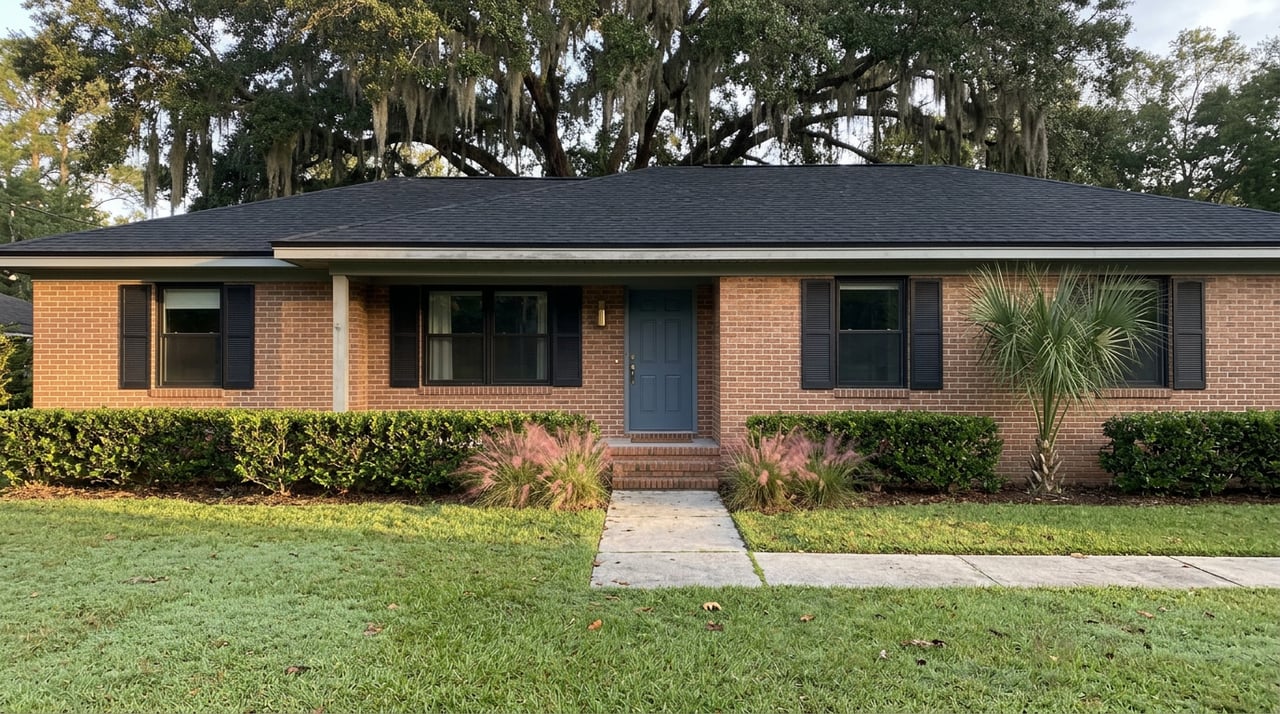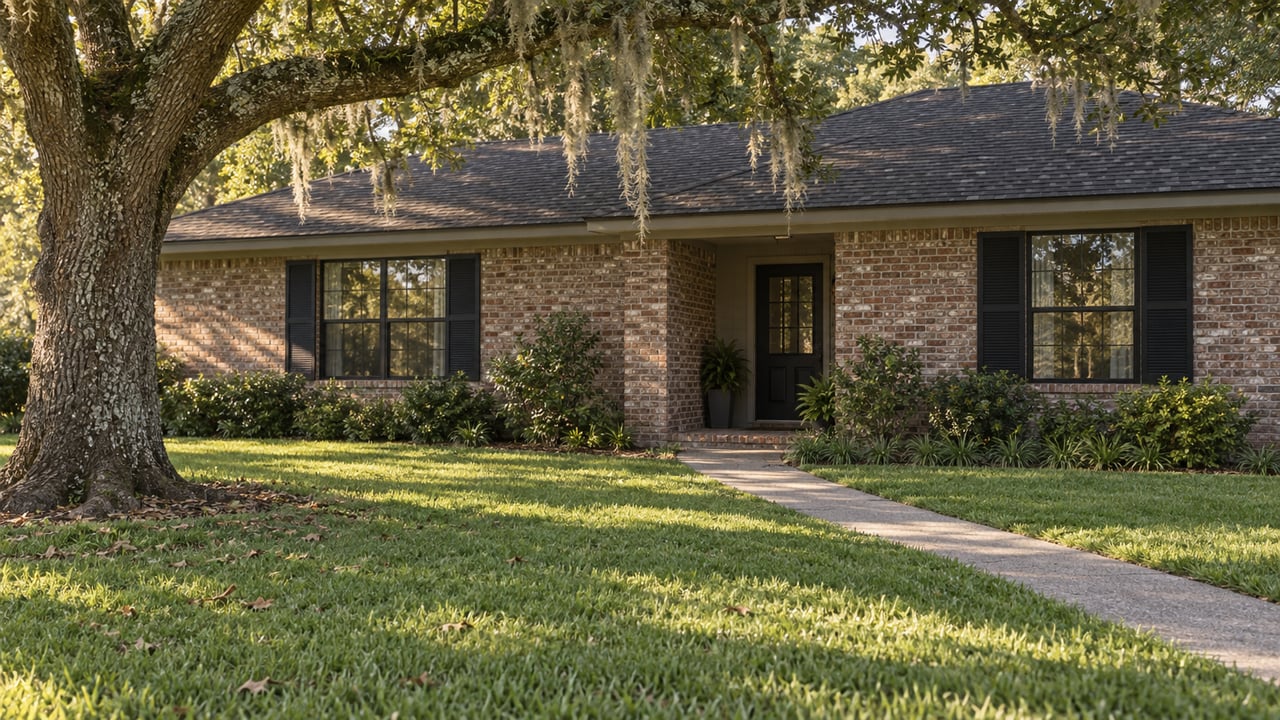
What does a new septic system cost in Alachua County? Ask that question on two parcels a few miles apart, both wooded, both a similar size, both outside city sewer lines, and you can get two very different answers. Not because of soil. Not because of lot size. Because of a boundary most buyers never think to ask about until the septic contractor's quote comes back.
That boundary is a Basin Management Action Plan, or BMAP, and as of this year it is doing more to shape the cost of rural land west and south of Gainesville than almost anything else in a typical purchase agreement.
The Quote That Doesn't Match the Listing
Here's the pattern. A buyer finds a few acres of land near Newberry or out toward High Springs, the kind of parcel that shows up in searches for space, quiet, and a manageable drive into Gainesville. The listing mentions well and septic. The buyer assumes that means a standard system, because that's what "septic" has always meant in this part of Florida.
Then the soil evaluation comes back, or the contractor walks the site, and the number attached to the septic system is thousands of dollars higher than a neighboring county quote for a similar lot. The buyer didn't miss anything in the listing. The listing never had to say it. What changed the price is a springs protection boundary that runs through the county, invisible on a plat map, and very real on an invoice.
What Actually Changed, and When
Alachua County isn't newly regulated here. The state has required enhanced treatment in sensitive springsheds for years. What's new is enforcement catching up to the map. According to a release covered by Mainstreet Daily News in August, updated requirements tied to the Florida Department of Environmental Protection's Basin Management Action Plans are now in effect across specific parts of the county, and Alachua County's water resources program manager, Stacie Greco, put the reason plainly: traditional septic systems do not treat the nitrogen in wastewater the way the state now requires in these zones.
The rule traces back to a 2023 change in Florida law that bars new conventional septic systems on lots of an acre or less inside a BMAP Priority Focus Area, and requires enhanced nutrient reducing technology, called ENR-OSTDS, anywhere central sewer isn't available within those boundaries. In Alachua County, that touches three named zones: the Santa Fe Priority Focus Area, the Orange Creek Basin, and the Silver Basin, the last of which requires ENR upgrades on existing systems, not just new ones, by 2046.
The Santa Fe zone is the one that matters most for buyers looking at rural land west of Gainesville. Florida DEP's Santa Fe River Basin Management Action Plan lays out three Priority Focus Areas inside that basin: the Devil's Complex, the Hornsby, and the Ichetucknee. The Hornsby PFA alone covers roughly 49,500 acres and includes the cities of High Springs and Alachua. That's not an obscure corner of the county. That's exactly where a lot of relocation and acreage buyers are already looking.
Why the Cost Gap Is So Wide
An enhanced system isn't a bigger tank. It's an entirely different piece of equipment, built to strip nitrogen out of wastewater before it reaches groundwater, because the aquifer under this part of Florida is unconfined limestone with very little natural filtration between a drain field and the springs it feeds. That's the same karst geology that gives the region its springs and sinkholes, and it's the reason the state drew these lines here in the first place.
The practical difference shows up like this:
| Conventional System | ENR-OSTDS (Required in PFA) | |
|---|---|---|
| Typical installed cost | $5,000 to $10,000 | $10,000 to $25,000+, sometimes reaching $35,000 combined with well work |
| Annual maintenance | $300 to $500 | $400 to $800, mandatory operating permit |
| Where required | Most of North Florida with adequate soil and water table separation | New systems on any lot inside a Priority Focus Area, and any lot of an acre or less inside the wider BMAP zone |
That gap is the whole story. A buyer comparing two similar rural parcels, one inside a Priority Focus Area and one just outside it, is comparing land that looks identical and costs differently to build on. Nothing about the listing photos, the road frontage, or the acreage count will tell you which side of the line you're on. Only the county's BMAP maps will.
The Twist That Cuts the Other Way
Here's where the story stops being only a cost problem. If a rule this specific just went into effect, someone already sitting on an older conventional system inside these zones has a decision to make, and the county just made that decision cheaper.
Alachua County's Environmental Protection Department received Florida DEP funding to offer rebates of up to $16,000 for homeowners upgrading an existing septic system to ENR technology within the Silver and Santa Fe basins. That's not a small gesture. Depending on the system, it can cover most or all of the premium an ENR upgrade adds over a standard replacement.
For a seller with an aging conventional system on land inside the Santa Fe Priority Focus Area, that rebate changes the math on timing. Upgrading before listing, using the rebate to offset the cost, can remove a negotiating point a buyer's inspector would otherwise flag. Waiting and letting a buyer discover the requirement during due diligence hands that same buyer the leverage instead, minus the rebate the seller could have claimed. Funding for the program is limited and the county has said it is actively pursuing more, so the rebate isn't a standing guarantee. It's a window, and right now it's open.
What This Means Before You Write an Offer
If you're looking at acreage or a rural homesite anywhere in the corridor running from Gainesville's western edge out toward Newberry, Alachua, or High Springs, the septic question deserves the same early attention as the survey and the well. Florida doesn't require a statewide point-of-sale septic inspection, so unless you ask, nobody is obligated to hand you a system diagram or a BMAP determination before closing.
The fix is straightforward. Before you're deep into a contract, call Alachua County's Environmental Health office and ask two things: whether the parcel falls inside a BMAP Priority Focus Area, and if so, whether it's Santa Fe, Orange Creek, or Silver Basin. That single phone call tells you which cost column above applies to your purchase, and whether an existing system on the property might already qualify for rebate-assisted upgrade if you inherit it as-is.
For sellers, the same call answers a different question: whether it's worth upgrading now, while state rebate dollars are still available, rather than leaving that conversation to a buyer's inspector.
A Few Questions Worth Asking Early
Does this apply to every rural property in Alachua County, or just certain areas? Only certain areas. The requirement is tied to BMAP Priority Focus Area boundaries within the Santa Fe River basin, plus the separate Orange Creek and Silver basins. Property outside those mapped zones is not automatically subject to the ENR requirement, though the broader 2023 state law also restricts new conventional systems on lots of an acre or less inside any BMAP area, focus zone or not.
How do I find out if a specific parcel is inside a Priority Focus Area? The county's Environmental Health office can check a parcel against the current BMAP maps directly. Florida DEP also maintains the underlying Santa Fe River BMAP documentation, including the PFA boundaries, if you want to see the source material yourself.
Is the rebate available to a buyer, or only to whoever currently owns the system? The rebate program is structured for homeowners upgrading an existing system, which means it typically applies to whoever owns the property at the time of the upgrade. That's part of why the timing question, upgrade before listing versus after closing, matters as much as the dollar amount.
Does this affect homes already connected to Gainesville's sewer system? No. The urban core served by municipal sewer isn't subject to this requirement. It's specifically the suburban and rural properties still relying on private septic, concentrated in the areas west and south of the city, where this shows up.
Rural land in this part of Florida still holds real appeal, the space, the tree cover, the quiet distance from campus and clinic traffic without losing the drive into Gainesville. Understanding where the septic lines actually sit just means that appeal comes with an accurate number attached, instead of a surprise one.
If you're weighing a rural parcel near Newberry, High Springs, or Alachua and want a straight answer on what it will actually cost to build or sell there, Harder Home Team can help you check the boundary before you write the offer, not after.